C语言笔记1
第一课 class 1
C is a language that faces processes.
It can recognize capital or not.
1.Install Dev-C++ (we can also use vs code)
2.Show page like this:
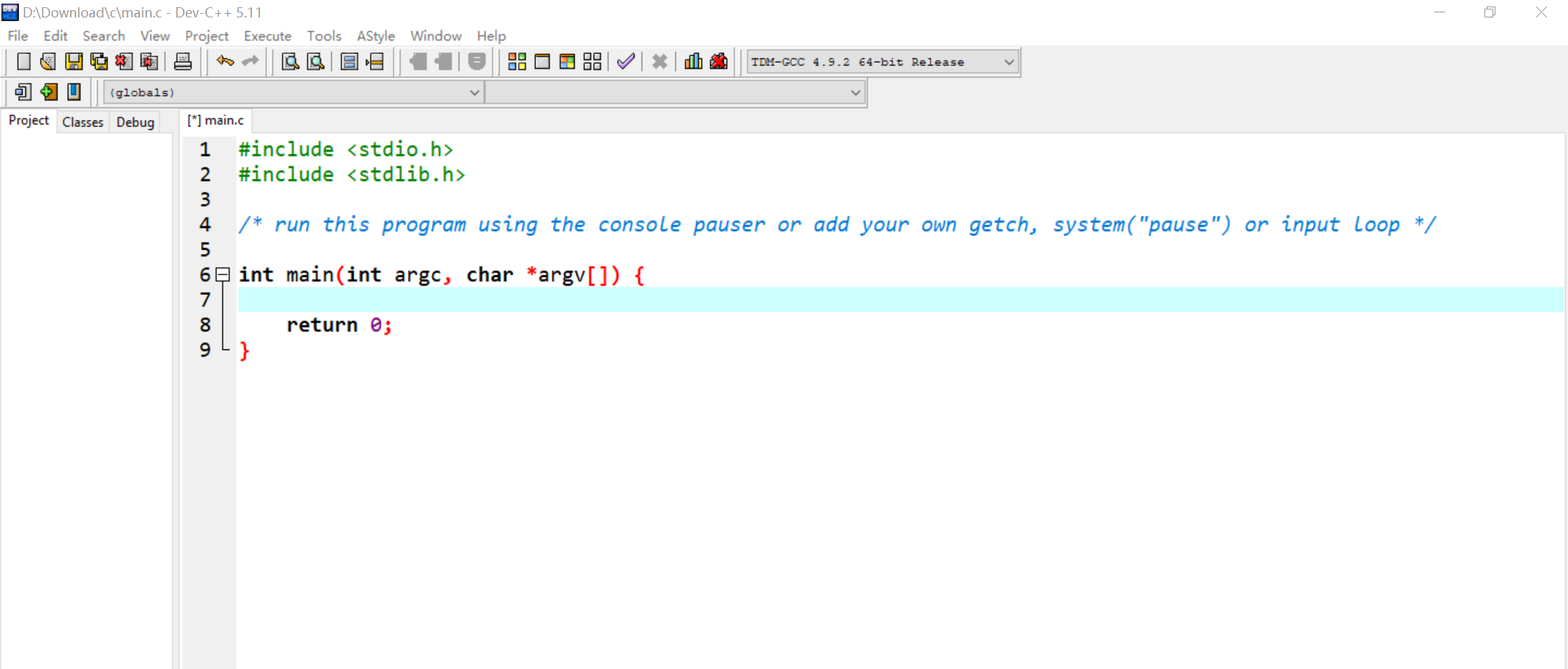
*‘Include’ is a word that has been definited, we can’t use it as variable again.
*Content after ‘include’ is the stock of C
Inside ‘/\ */‘ is the annotation(注释).
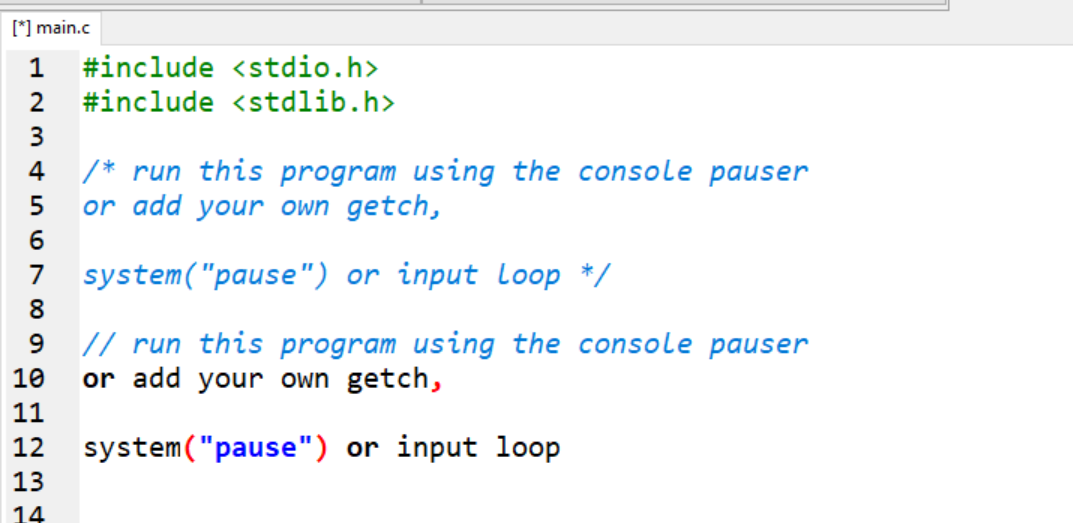
*Another way to show annotation is after ‘//‘
The difference between ‘/\ */‘ and ‘//‘ : ‘/* */‘ can include paragraphs, but ‘//‘ can only include one line.
The blue one means the annotation.
*‘Main’ is the entre of the function and inside the ‘ { } ’ is the body of the function. There is only one main function at anywhere.
*After every sentence, we should add ‘;’
3.Then we can write some simple code and click the compile(the red circle one) to check whether there is a grammatic error:
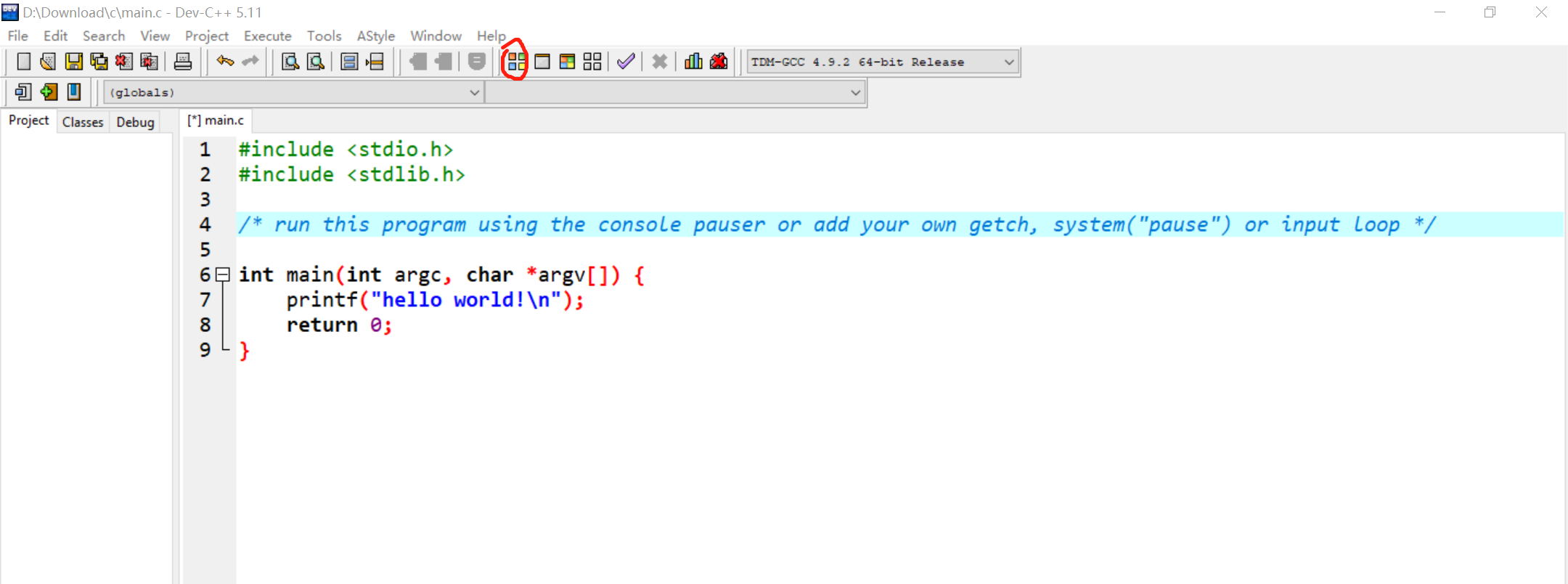
*’Printf’ means to print/show the content inside the (). It won’t change to a new line unless ‘\n’ is added.
*Content in “ “ are considered as string, and printed out.
*’\n’ means to change to another line.
After clicking compile: if there is an error, it will show you where it is; if there isn’t an error, it will create an exe file in the same file as the c file.
We can also use the exe file to excute the code.
- If there is nothing wrong we can click the button next to compile(on the right), the ‘run’ button. cmd will appear and the content after printf will be shown.
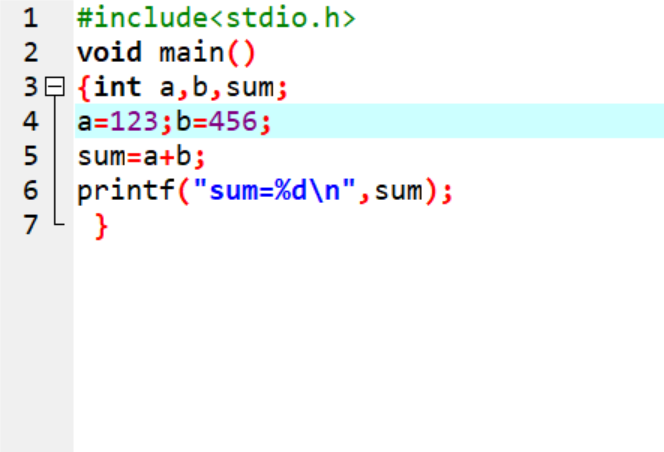
“%d” means the integer(s) behind the ‘,’ will be at the postion of “%d” when excuting.
We need to identify the variables first and give them values. Then calculating,and ouput.
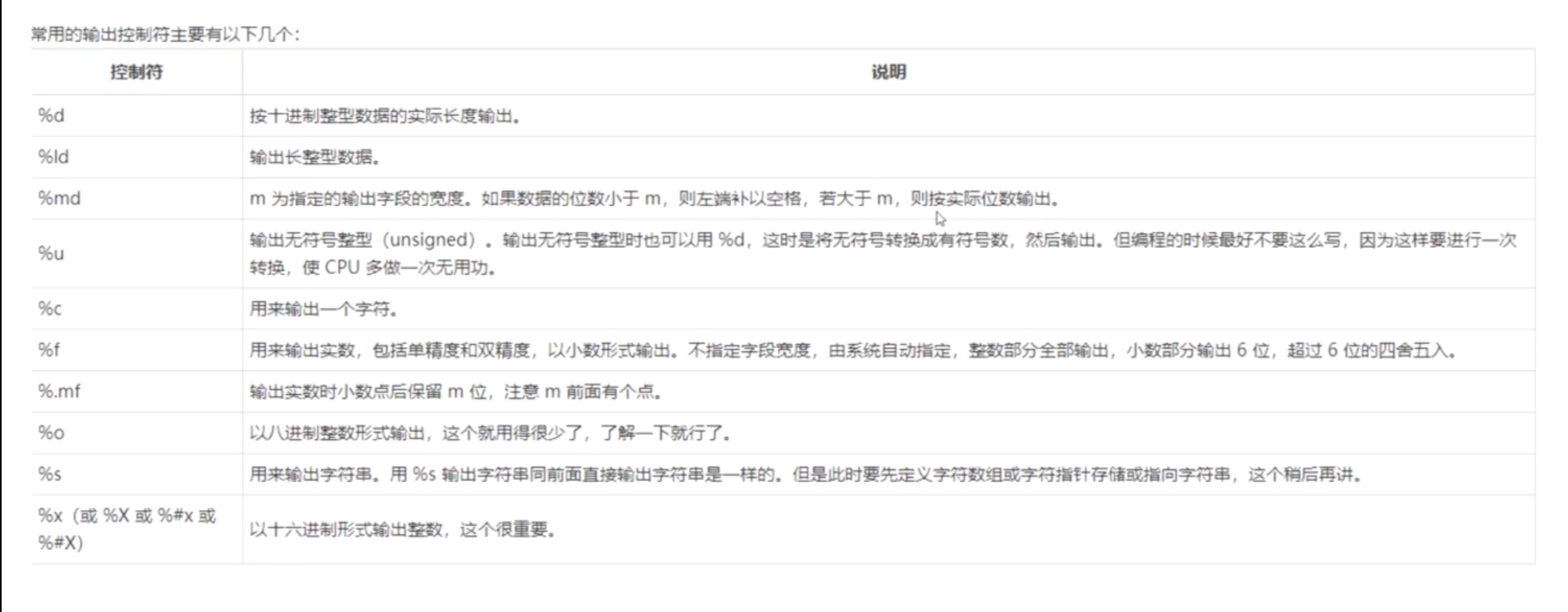
- “scanf()” input values
1 | scanf("%d,%d",&a,&b); //input numbers are separated by ',' |
add “”in””string:
example: “Please input “yes””
1 | printf("Please input \"yes\"\n"); |
function in function:
1 | max(a,b); |
8.characters that can be used:
abcde… …z
ABCDE… …Z
0~9
+-*/=,.:;?“ ‘~|&^!%#(){}[]<> (space) (tab)
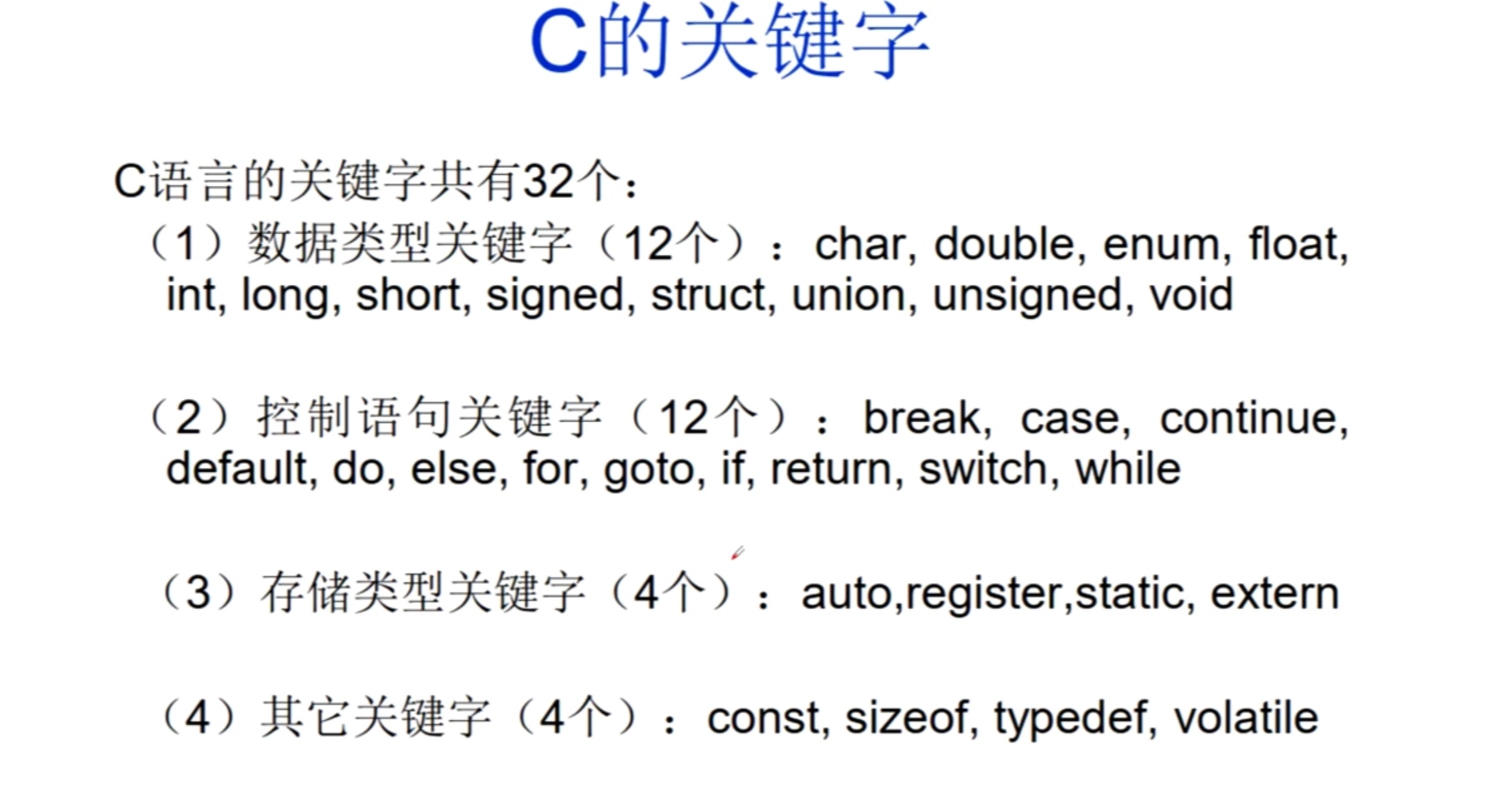
保留字(words that have been identified): (32)
type:int, long, float, … …
sentences: if…else, while, for, … …
store: auto, static,… …
calculation: sizeof
*put int in char, it will show the character through ASCII
*put char in int, it will show the value of ASCII
*if the integer is positive, it is stored as true form; if it is negative, it is stored as complement form.
*initialization:
1 | int a=5; |
home exercise:guess number(simple form)
1 |
|
out:
guess a number from 0 to 100.
50
It is too large!
25
It is too large!
12
It is too large!
6
It is too small!
8
It is too small!
9
It is too small!
10
You are right!
Process exited after 20.56 seconds with return value 0
第二课 class 2
1.’ ‘内加字符,” “加输入输出
2.int * i –>*指针
3.a=b: = 赋值 assignin
4.初始化赋值 initialization:int a=0;
5.sizeof :看字节数
6.输出输入(输入格式以scanf后引号内为准,&:取地址)
e.g. the input values a b are divided by “,”
1 | scanf("%d,%d",&a,&b); |
7.测试testing standard:正确数据 correct one,临界值 the boundary,错误数据 wrong one
const:定义常量 constant,不可改值 can’t be change,一般大写常量capital,在内存里有空间exist in memory
#define:用途同const,在内存内无空间 doesn’t exist in memory
8.
| 类型名称 | 类型说明符 | 字节数 | 数值范围 |
|---|---|---|---|
| 基本整型 | int | 2 | -32768~32767 |
| 短整型 | short [int] | 2 | -32768~32767 |
| 长整型 | long [int] | 4 | -2147483648~ 2147483647 |
| 无符号基本整型 | unsigned [int] | 2 | 0~65535 |
| 无符号短整型 | unsigned short [int] | 2 | 0~65535 |
| 无符号长整型 | unsigned long [int] | 4 | 0~4294967295 |
| 运算符 | 运算规则 | 操作数数目 | 优先级 | 结合方向 |
|---|---|---|---|---|
| - | 负号 | 单目 | 2 | 右结合 |
| + | 加法 | 双目 | 4 | 左结合 |
| - | 减法 | 双目 | 4 | 左结合 |
| * | 乘法 | 双目 | 3 | 左结合 |
| / | 除法 | 双目 | 3 | 左结合 |
| % | 求余或模 | 双目 | 3 | 左结合 |
同级:左集合,从左往右:d=3*5/4
d=a=3:优先级先右后左
整数相除没有余数,截取整数:1/3+1/3+1/3=0
浮点数正常计算
10/33=10,10.0/3\3=10.0
9.自增自减:
x=10,y=++x,y=11,x=11
x=10,y=x++,y=10,x=11
i=6
++i=7,i=7
i++=7,i=8
a=–i,a=7,i=7
b=i–,b=7,i=6
-i++=-6,i=7
10.强制转换:(int)(x+y) (有损失some value will be lost)
11.关系运算(1/0表示真假)
5>(4<5) 可以运行4<5值为1(真),5>1
==比=优先级高
1、圆括号【()】、下标运算符【[]】、分量运算符的指向结构体成员运算符【->】、结构体成员运算符【.】;
2、逻辑非运算符【!】、按位取反运算符【~】、自增自减运算符【++】【 –】、负号运算符【-】、类型转换运算符【(类型)】、指针运算符和取地址运算符【*】【&】、长度运算符【sizeof】;
3、乘法运算符【\】、除法运算符【/】、取余运算符【%】;
4、加法运算符【+】、减法运算符【-】;
5、左移动运算符【<<】、右移动运算符【>>】;
6、关系运算符【< 】【>】【<=】【 >= 】;
7、等于运算符【==】、不等于运算符【!=】;
8、按位与运算符【&】;
9、按位异或运算符【^】;
10、按位或运算符【|】;
11、逻辑与运算符【&&】;
12、逻辑或运算符【||】;
13、条件运算符【?:】;
14、赋值运算符【=】【/=】【*=】【%=】【+=】【-=】【<<=】【>>=】【&=】【^=】【|=】;
15、逗号运算符【,】。
逻辑运算:0<x<5 变为 x>0&&x<5, &&为且
非:!(非0取反为0,0取反为1),与:&&,或:||
当计算一边值可确定真假时,另一边不会计算
表达式1 ? 表达式2 :表达式3 = if 表达式1 表达式2 else 表达式3 (可嵌套)
运算符:=
复合运算(从右往左):+=,-=,*=,/=,%= (a+=b—a=a+b)
,表达式
全部计算,最后一个表达式为整个式子的值
e.g. n=a=5+3,a+10,a*8
getchar():输入字符
putchar():输出字符